The Optimization Trap: Re-architecting Meritocracy for the AI Era
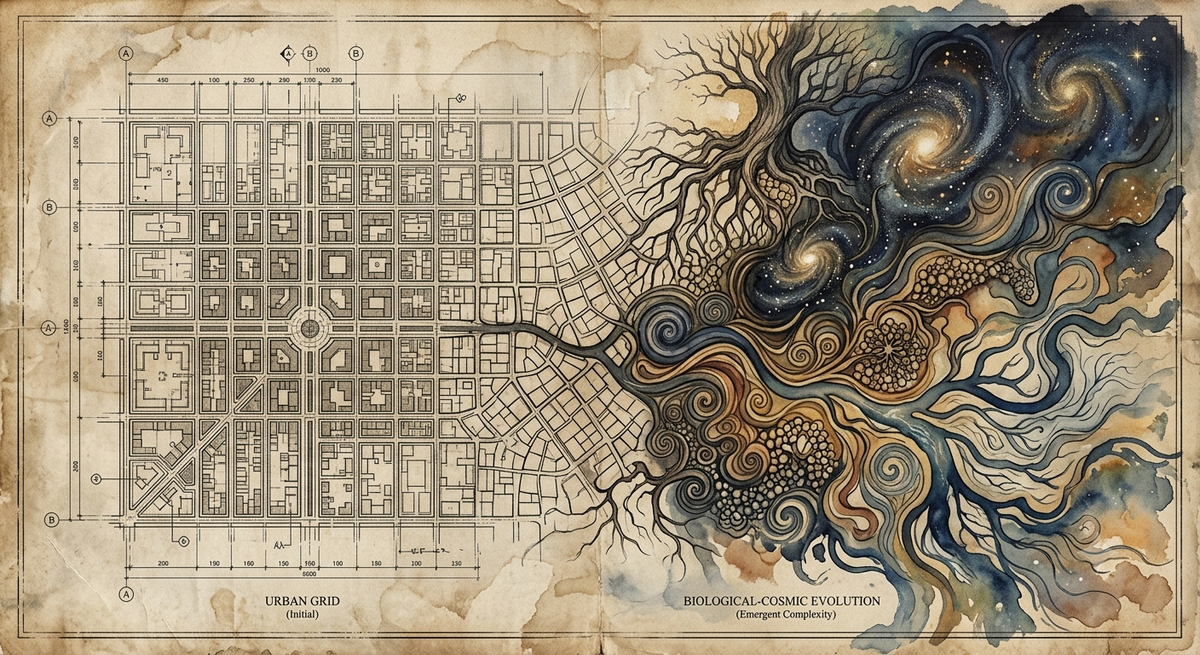
In the engineering of high-performance systems, there is a fundamental tension between optimization and resilience. If you optimize a system solely for a single metric—say, throughput or latency—you inevitably create brittleness. You strip away the "redundant" components that don't contribute to that specific KPI, leaving the system incapable of responding to environmental shifts.
I see this same tension playing out in our social architecture.
Our modern systems, particularly in high-efficiency hubs like Singapore, are masterclasses in optimization. They are designed for stability, rapid growth, and measurable output. But as we push the boundaries of this optimization, we are hitting a critical edge case: the human element that does not fit the standardized template. When a society’s success metrics are tied almost exclusively to a specific type of academic or technical proficiency, we create high friction for those whose talents reside in different bounded contexts.
The Error of Single-Metric Optimization
In software architecture, if you attempt to force every module into the same interface—regardless of whether it is a database driver or a UI component—the system eventually fails. You lose the ability to leverage specialized logic.
Humans are much the same. We possess a vast variety of "hardware" and "instruction sets." Some individuals are built for the high-frequency, high-pressure demands of technical execution; others are built for the subtle, qualitative work of empathy, intuition, or creative synthesis.
True meritocracy has been misidentified as a standardized race. We have mistaken uniformity for fairness. A true meritocracy wouldn't just be about finding who is "the best" on a single track; it would be about building an architecture that allows different types of talent to shine and prove their utility within their own specialized domains. It would be an ecosystem of diverse, highly specialized agents, rather than a monocutlure of identical competitors.
The AI Disruption: The Death of the Measurable
We are currently entering a period of massive systemic disruption: the Era of Artificial Intelligence.
For decades, the "value" of human labor was largely tied to things that could be measured, quantified, and codified—technical skills, mathematical precision, and rote logic. These were the metrics our education systems were optimized to produce.
But AI is rapidly commoditizing the measurable. If a skill can be captured in a prompt or a dataset, its economic value will inevitably trend toward zero. The "technical" advantage we once relied on as a marker of merit is being automated away.
This leaves us with a profound question: What remains?
What remains is the unmeasurable. The skills that cannot be easily captured by an API or quantified in a spreadsheet—intuition, presence, ethical complexity, and the ability to navigate ambiguity. These are the "human" skills that reside in the gaps between the data points. As the measurable becomes cheap, the unmeasurable becomes the new premium.
The 70/30 Architecture: Fate and Agency
This brings me to a perspective I hold deeply—one that blends sociological observation with metaphysical truth.
I believe that a person’s life is structured by a fundamental 70/30 split.
The 70% is what we might call "Heaven-defined"—the Ming (命). This is your fundamental architecture: your innate temperament, your biological predispositions, the "given" code you were born with. You did not choose your CPU or your fundamental instruction set. Trying to force yourself to be something that contradicts this 70% is an exercise in extreme friction; it is a waste of energy that leads to systemic "leakage."
The 30% is the human element—the Yun (運). This is where your agency lives. It is the effort you apply to optimize the software running on your hardware. It is the way you refactor your habits, cultivate your focus, and learn to navigate the world using the tools you do have.
The mistake most of us make in our current system is trying to use our 30% to fight our 70%. We try to force ourselves into different "bounded contexts" through sheer willpower, hoping that if we work hard enough, we can change our fundamental architecture. But you cannot refactor the kernel by changing the user interface.
Conclusion: Trusting the Natural Order
As we navigate this era of disruption, we must stop looking for merit only in what can be measured by an algorithm. We need to start recognizing the value of the invisible architecture—the subtle, the qualitative, and the deeply human.
A healthy society should not be a race toward a single, optimized point. It should be a system that allows every individual to apply their 30% of agency to their specific 70% of nature, ensuring they function in resonance with the whole.
We must learn to trust the Tao—the natural flow of things—and recognize that the most powerful and effective architectures are often those that don't need to announce themselves. The strength you cannot measure is, ultimately, the strongest one.